Industry
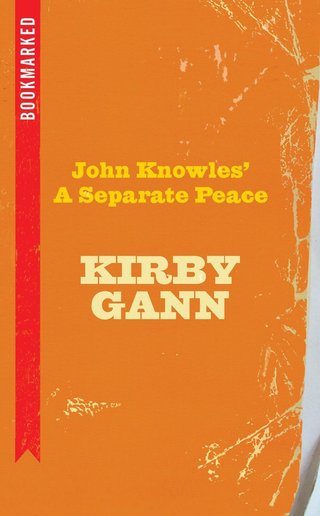
The Inaugural Title of the Bookmarked Series
John Knowles' A Separate Peace: Bookmarked
In the first book in the series, critically acclaimed author and series editor Kirby Gann takes on John Knowles' classic about the tragic friendship between two boys at a boarding school.
Set at a New England boarding school for boys during World War II, A Separate Peace is considered by many to be the quintessential coming-of-age novel. It tells the story of Gene, an introverted intellectual, and his friendship with Phineas, a handsome, charming athlete, over the course of one summer. Kirby Gann juxtaposes the novel’s tragic take on lost adolescent innocence with his own growing emotional and artistic awareness as a boy growing up in Kentucky in the 1970s and 1980s. In the process, Gann creates an indelible work that celebrates the timelessness of John Knowles’ classic novel.
“I finished your novel last night and, damn, my friend, you nailed it. . . . Mister Greuel! What a creation. I had a hard time with this because the book is much, much more than can be described in one or two sentences. But here's what I've got: ‘With a plot as full of twists and turns as an ancient Greek tragedy, Kirby Gann's Ghosting is one of the most beautifully worded and superbly crafted novels about the fateful consequences of being caught up in the criminal life that I have ever read.’ And I’m speaking truth.”

“Combining grit and poetry, deep feeling and an unsentimental gaze, Kirby Gann has written a novel as intimate as the stifling locale where it's set and as expansive as the minds and voices of the people ensnared there. Ghosting is dark, funny, unexpected, and populated with characters we immediately recognize even as they avoid cliché.”
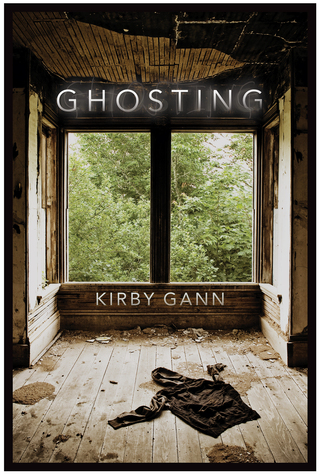
Ghosting
Fleece Skaggs has disappeared along with Lawrence Greuel’s reefer harvest. Convinced that the best way to discover the fate of his older brother is to take his place as a drug runner for Greuel, James Cole plunges into a dark underworld of drugs, violence, and long hidden family secrets, where discovering what happened to his brother could cost him his life.
A genre-subverting literary thriller explored through the alternating viewpoints of different characters, Ghosting is both a simple quest for the solution to a mystery, and a complex consideration of human frailty and equivocation.
"Gann's elegant prose perfectly captures the novel's sense of doomed romanticism.... [A] beautifully written novel about lofty ideals and inevitable disappointments."
REVIEWS
Excerpted from Rain Taxi Review of Books, Summer 2005
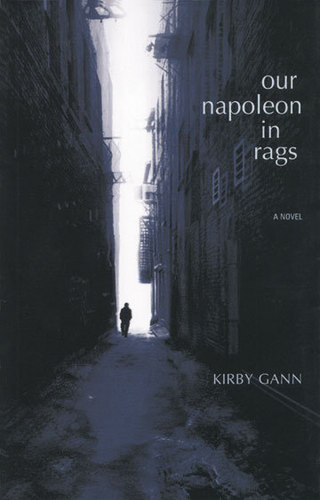
Alongside Gary Lutz and Sam Lipsyte, Kirby Gann is one of the more exciting writers to come along in recent years, his narrative moving deftly from black comedy (including an epic chain of events begun when a woman with Parkinson’s spill coffee) to deep melancholy, as Keebler’s speeches begin to take on less a sense of the urgency projected by a subway preacher and more a serious, grim warning. Gann has a subtle way of interlocking a comic narrative with grave politics: amidst the mockery of hippie poetry readings and art criticism, serious themes such as police brutality, incompetence, and lack of accountability surface over and over.... Gann takes on other broad themes: the sorry place of the artist in society, the sempiternal search for love, as well as the potential for effecting change through crowds of all incarnations—mobs, parties, audiences, communities. Importantly, Gann is a controlled writer who never lets the tone become preachy or the message and politics heavy-handed or obvious.
Our Napoleon in Rags is infused with a wicked sense of humor, often bracing the seriously dysphoric with the wildly comic, but never with overt slapstick or cliché. Gann doesn’t show off with the prose fireworks of Lutz or Brian Evenson, but his careful language choices are no less monumental. Indeed, this novel is a fine example of commendable prose: bright, original language; imaginative imagery; solid, spare dialogue; and no clichés or sentimentalism. It’s Gann’s lack of sentimentality that makes his work so fresh. There are many times when Our Napoleon in Rags could veer into schmalz, but Gann wisely steers far clear of this: Lambret, the male prostitute, is kept literally and narratively at a distance; the brokenhearted (of which there are many) are circled and observed; the idea of abandoned or lost children is only touched upon when absolutely necessary. Nothing is ever milked for emotional effect, or scrutinized to the point of steering the reader to some emotional conclusion.
Our Napoleon in Rags, finally, is a novel concerned with everlasting themes: the search for love and understanding; political outrage and its accompanying dosage of helplessness; and the artist’s lack of respect in society. Though these themes have been considered by every serious novelist, Gann’s is a fresh perspective, or at least a fresh embodiment of it.... Gann seems to appreciate the gravity of all moments, but without losing his sense of humor—without which all moments would be bleak indeed.
SUGGESTED SUMMER READING
By day he works as Managing Editor of Louisville-based Sarabande Books. By night he spins fictions around a character who wishes to change the world. His name is Kirby Gann,novelist, and he also teaches in the brief-residency MFA program at Spalding University. Haycraft Keebler, Gann’s quirky protagonist, may remind readers of a certain protagonist invented by J.D. Salinger a few years back, and it wouldn’t be surprising if Our Napoleon in Rags winds up attracting a cult following. Gann’s writing is dense and interesting; he seems to be conducting a one-man campaign to stamp out the cliché, that withered figure of speech which is such a mercenary part of the thin landscape of contemporary fiction and cinema. Haycraft is bipolar, and he may be gay; he’s gay enough, at least, to fall for a fifteen-year-old street hustler. Haycraft and his gang hang out at a bar called the Don Quixote, symbolism which needs no further explication except to say: Michael Cunningham now has a rival in the quest for creating characters who defy both stereotype and dogma. Does Haycraft Keebler manage to redeem the world? Read Our Napoleon in Rags, and find out for yourself. Recommended especially for failed (and successful) revolutionaries.
"Montreux, KY, a decaying urban slagheap, could not be more different from glamorous Montreux, Switzerland. After a PR campaign fails to revitalize the city, bipolar idealist Haycraft Keebler tries to rally people to create 'a neighborly, self sufficient community ... built on the feminine principles of
tenderness and compassion.' His base is the appropriately named Don Q Tavern, whose other habitués include libertine anarchist Romeo Diaz, brutal policeman Chesley Sutherland, and an inhalant-huffing teenage male prostitute named Lambret who becomes Haycraft's special redemption project and lover. All serve as narrators, and although all are archetypes, they are real and compelling people. Their many foibles and competing agendas and philosophies, however well intentioned, lead to disaster. Can one ordinary person change the world? Just when Gann's answer seems to be a defeated 'no,' the coda, set a few years after these events, suggests that people can redeem themselves and maybe those closest to them, improving the world incrementally through individual love and a willingness to change. Highly recommended for both academic and public libraries."

The Barbarian Parade
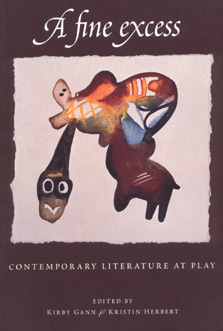
A Fine Excess: Contemporary Literature at Play
"In Ghosting, Kirby Gann has created an utterly compelling ode to the fearsome and contradictory desires of his unforgettable characters. Writing in brilliantly sustained licks of prose, Gann gives us flesh-and-blood human beings who cannot escape what they cannot help wanting. Their fate is true, the ride beautiful and dark."